Updated · Fire Damage Flagstaff
The short answer
In Arizona, a standard homeowners policy generally covers sudden and accidental fire and smoke damage, including smoke from a fire next door, a nearby wildfire or a furnace puff-back, along with contents and additional living expenses. Smoke that built up gradually, such as from a fireplace that leaked all winter, is often excluded. Coverage limits, deductibles and replacement cost terms decide the final payout.
What is usually covered
| Situation | Usually covered? |
|---|---|
| House fire from cooking, wiring, a heater or a chimney fire | Yes |
| Smoke damage in rooms the fire never reached | Yes |
| Smoke from a neighbor's house fire | Usually yes |
| Smoke and ash from a nearby wildfire with no flames on your property | Usually yes |
| Furnace puff-back that coats the house in soot | Usually yes, as sudden and accidental |
| Water damage from firefighting | Yes, as part of the fire claim |
| Additional living expenses while the home is unlivable | Yes, up to policy limits |
| Gradual smoke from a leaking fireplace or stove over months | Often excluded as maintenance |
| Smoke from agricultural or industrial operations | Often excluded |
| Fire set intentionally by the owner | No |
Wildfire smoke claims
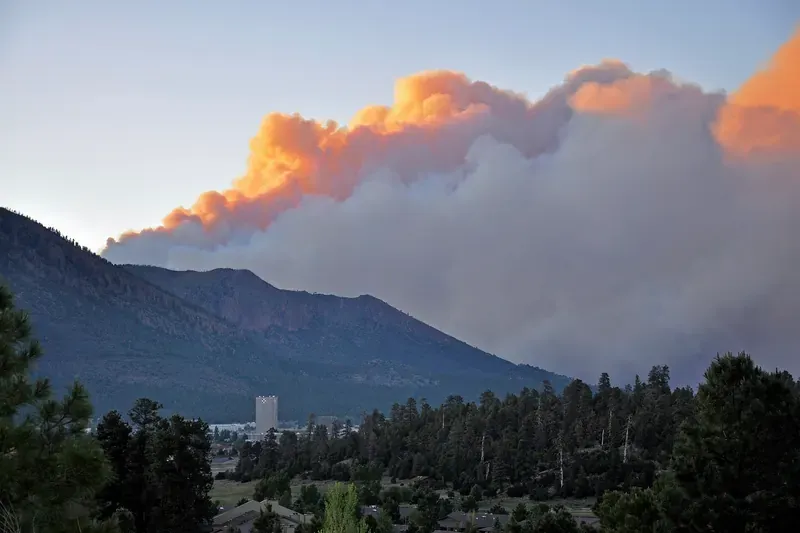
Flagstaff homeowners have filed many smoke claims after the Schultz, Museum, Tunnel and Pipeline fires. Most standard policies cover smoke damage from a wildfire even when the house did not burn, but insurers want evidence that the smoke caused physical damage, not just a smell for a few days. Useful documentation includes photos of ash on sills and floors, soot film on walls and around vents, discolored cooler pads and filters, and notes on the evacuation dates and how long smoke lingered.
Many policies also cover additional living expenses during a mandatory evacuation order, even if the house is fine. Ask about it. The wildfire smoke cleanup page describes the cleaning that typically follows.
Contents: clean or replace?
Personal property coverage pays for belongings damaged by fire and smoke. Insurers often prefer cleaning when it is cheaper than replacement, which is why a contents pack-out with a photo inventory matters: it shows what was cleanable and what was a loss.
- Replacement cost policies pay to replace items with new ones, often after you buy the replacement.
- Actual cash value policies subtract depreciation, which can leave a large gap on older items.
- Sublimits may cap jewelry, art, collectibles, firearms or electronics unless they are scheduled separately.
Keep damaged items until the adjuster has seen them or agreed they can go.
Additional living expenses
Additional living expense coverage, sometimes called loss of use, pays the extra cost of living elsewhere while your home is repaired: hotel or rental housing, meals above your normal grocery spending, extra mileage and laundry. It usually has a dollar limit or a time limit. Keep every receipt and a simple log, and ask your adjuster up front what they need to reimburse you.
Chimney and wood stove fires
Accidental chimney fires are generally covered, including resulting smoke damage, framing repair and roof damage around the flue. Insurers sometimes ask when the chimney was last inspected; a long gap can lead to questions about neglect. Keep chimney sweep receipts. Slow soot buildup from a stove that back-drafted all winter is more likely to be treated as maintenance than a sudden loss. See chimney and wood stove fire damage.
How to file a strong fire or smoke claim
- Report the loss promptly and get a claim number.
- Get the fire department incident number.
- Photograph every room, including closets and vents, before cleaning.
- Approve emergency board-up and water removal; policies require you to prevent further damage.
- Request a written, line-item scope from your restoration company and compare it with the adjuster's estimate.
- Keep the contents inventory, receipts and a log of every conversation.
- If you disagree with a decision, ask for it in writing with the policy language it relies on. The Arizona Department of Insurance and Financial Institutions accepts consumer complaints, and some homeowners with large losses hire a licensed public adjuster.
The fire damage restoration cost guide explains the common estimate lines.
Renters, condos and HOAs
Renters need their own HO-4 policy for belongings and living expenses; the landlord's policy covers the building. In condos and townhomes, the HOA master policy usually covers the structure and common areas, while the owner's HO-6 policy covers interior finishes and contents. When smoke comes from a neighbor's unit, several policies may be involved; report it right away and start cleaning while responsibility is sorted out.
Second homes, vacancy and seasonal policies
Many cabins and second homes around Flagstaff are insured under seasonal or dwelling policies rather than standard homeowners forms. Those policies can have different terms for fire and smoke, different contents coverage and conditions about vacancy. Some reduce coverage for certain losses if the home has been unoccupied for a set period. If you own a cabin in Munds Park, Parks or Kachina Village, read the vacancy and occupancy sections before a loss, and ask your agent how smoke from a wildfire is treated when nobody is home.
Documenting smoke damage the adjuster can see
Smoke damage can be subtle in photos. A few habits make it visible: wipe a white cloth across a wall or ceiling and photograph the cloth next to the spot; photograph supply vents and the furnace filter; open closets and cabinets and photograph the shelves; and note when and where the smell is strongest. Keep a simple log of dates, conversations and expenses alongside the photos.
When the fire started at a neighbor's home
If a fire next door damaged your home, start with your own insurer even if the neighbor was at fault. Your company pays your claim under your policy and may then seek repayment from the neighbor's insurer, a process called subrogation. If it succeeds, your deductible may be returned. Keep your own photos and receipts separate from the neighbor's claim, and do not sign anything from the other insurer without reading it carefully.
Related questions
Does insurance cover smoke damage to my car?+
Vehicles are covered by auto insurance, usually under comprehensive coverage, not your homeowners policy.
Does homeowners insurance cover smoke damage from a wildfire?+
Usually yes, even if the house did not burn, as long as the smoke caused physical damage. Document ash and soot before cleaning.
Is a furnace puff-back covered?+
Generally yes, as a sudden and accidental smoke event. Slow buildup from a poorly maintained appliance may be excluded.
Will insurance pay for a hotel after a fire?+
Most policies include additional living expenses while the home is unlivable, up to the policy's limits.