Firefighting Water Damage Drying in Flagstaff: the short answer
Water damage after a fire comes from the hoses and sprinklers that put it out. Restoration crews extract standing water, remove soaked drywall, insulation and carpet pad, dry the structure with air movers and dehumidifiers, and in winter drain or heat the plumbing so pipes don't freeze in a house without power. Drying within 48 hours prevents mold. Typical costs run $1,500 to $6,000.
Why fires leave so much water behind
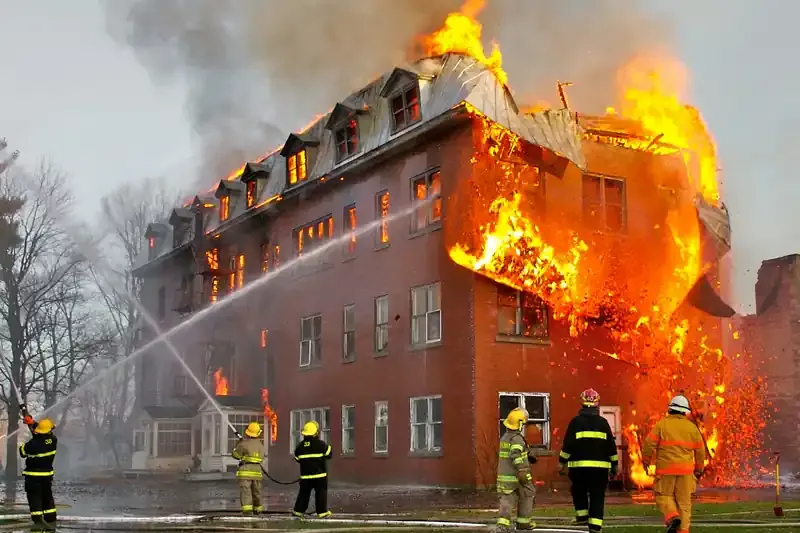
Putting out a structure fire takes a lot of water, and firefighters will always choose a wet house over a burned one. Hose streams soak the burned area, the attic above it and often the rooms around it to stop hidden fire from spreading inside walls. Fire sprinklers, where installed, also discharge until someone shuts the valve. The result is a water loss layered on top of a fire loss.
Water from a fire is not clean water. It mixes with soot, ash and burned materials, so it stains, smells and carries contaminants into everything it soaks. Porous materials it touched, such as carpet pad, insulation and the bottom of drywall, are usually removed rather than dried in place.
How drying after a fire works
- Make safe. Power stays off until an electrician clears it; drying equipment runs on temporary power if needed. Sagging ceilings are brought down in a controlled way.
- Extract. Standing water is pumped and extracted from floors and carpet.
- Remove. Soaked insulation, carpet pad, ceiling drywall and the lower sections of walls come out so cavities can dry and soot-laden water does not wick further.
- Dry. Air movers and dehumidifiers run around the clock, with moisture readings each day until framing and subfloor are dry.
- Treat. Antimicrobial treatment is applied to framing and subfloor before closing anything up.
- Coordinate. Drying runs alongside smoke damage cleanup and contents cleaning, so crews plan rooms in sequence.
The winter problem: frozen pipes in a fire-damaged house
This is the Flagstaff-specific part. A house that has had a fire usually has its power and gas shut off, and its windows broken or boarded. In January, overnight lows in the teens or below zero can bring the inside of that house below freezing within hours. Any water left in the supply lines, the water heater or the toilet tanks freezes, splits pipes and then floods the house again when it thaws.
- Drain the system. Shut the main, open faucets on every level, drain the water heater and flush toilets to empty tanks.
- Or keep it warm. Temporary heaters on safe temporary power, with the house boarded up, can keep the interior above freezing during drying.
- Protect the well. Rural homes around Parks and Bellemont with well systems need the pump and pressure tank protected or drained too.
- Board up first. Heat escapes through broken windows and roof vents; emergency board-up makes freeze protection possible.
Mold after a fire
Mold needs moisture, food and time, and a fire-damaged house supplies all three: wet drywall paper, soaked wood and warm temporary heat. Growth can start within 48 to 72 hours. Drying quickly and verifying with moisture readings prevents it almost every time. If drying was delayed, by a long fire investigation or waiting on an adjuster, ask for a mold check before walls are closed.
Costs and insurance
Extraction and drying in a few rooms typically costs $1,500 to $3,000. Wet ceilings and attic insulation over a larger area more often run $2,500 to $6,000. Winterizing plumbing in an unheated fire-damaged house costs about $200 to $600, and mold treatment, if drying was delayed, $1,200 to $4,000.
Water damage from firefighting is part of the fire claim under a standard homeowners policy, not a separate water claim. Keep photos of the standing water and wet ceilings, and the daily moisture readings, with your fire claim paperwork. The how long fire restoration takes guide explains how drying fits into the timeline.
Drying a fire-damaged house in the monsoon
Summer fires bring the opposite problem from winter ones. During the July to September monsoon, outdoor humidity rises sharply on stormy afternoons, and opening a fire-damaged house to air it out can actually push more moisture into it. Drying in monsoon season relies on closing the house as much as the board-up allows and running dehumidifiers hard, with readings taken every day to confirm progress. Afternoon storms can also blow rain through roof vent holes that were tarped in a hurry, so tarps should be checked after each storm until permanent repairs are done.
Fire hose water that ran into a crawl space or basement dries slowest of all. Crawl spaces under Flagstaff homes often need the vapor barrier pulled and a dehumidifier ducted into the space before the framing will dry.
Sprinkler water versus hose water
Water from a residential fire sprinkler is clean when it leaves the head and usually soaks a smaller area, so more materials can often be dried in place. Hose water is mixed with soot and debris and covers more of the house. The drying approach is similar, but sprinkler-only losses generally need less demolition. Either way, have someone confirm the sprinkler system is restored and inspected before the house is occupied again.